AS 4678:2002 sets the framework, but in Darwin the ground dictates every shoring decision. The profile is rarely simple: lateritic gravels over weathered mudstone, often saturated during the wet season. The technical team tackles deep excavation design in the Darwin CBD and surrounding suburbs by combining the local geotechnical model with advanced limit-equilibrium and finite-element analysis. Darwin’s mean annual rainfall exceeds 1 700 mm, and the November-to-April monsoon can raise the water table to within 1.5 m of the surface, making dewatering strategy a first-order parameter. Before setting shoring levels, the team frequently reviews data from in-situ permeability tests to calibrate the groundwater model and size the temporary drainage system.
In Darwin’s lateritic profile, a 6-metre excavation can behave like a 12-metre one if the perched water table is not intercepted early.
Technical details of the service in Darwin
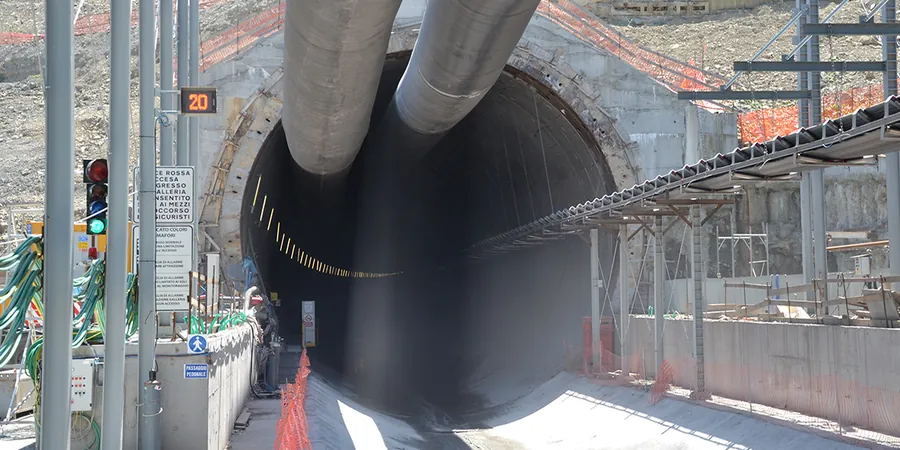
Risks and considerations in Darwin
The Burrell Creek Formation mudstone beneath Darwin loses 40-60% of its unconfined compressive strength after just three wet-dry cycles, a characteristic that catches out designs that assume constant rock-head. Coupled with a groundwater table that can rise three metres in a single monsoon event, the risk of base heave in deep cuts is real. Piping at the toe is another hazard — particularly where sandy seams connect the excavation base to a tidal source. The design explicitly checks hydraulic gradients against critical values from Terzaghi and Harza, and where the factor of safety drops below 1.5, the specification calls for jet-grouted base plugs or relief wells. Seismic demand is modest by Pacific Rim standards, but the soft-storey effect in partially excavated sites requires a pseudo-static check under AS 1170.4, with a site-specific hazard factor confirmed through the latest Geoscience Australia NSHA model.
Our services
Every deep excavation in Darwin starts with a ground model that respects the tropical weathering profile. The service package covers design, peer review, and construction-stage support.
Shoring design and wall selection
Comparative analysis of soldier pile, sheet pile, secant pile and diaphragm wall options against Darwin’s ground conditions, with limit-equilibrium and WALLAP/PLAXIS modelling.
Dewatering and groundwater control design
Groundwater modelling (MODFLOW or SEEP/W) to specify deep-well arrays, vacuum-assisted systems, and sump pumping capacities that handle monsoon recharge rates.
Construction-stage monitoring and peer review
Independent review of excavation sequences, trigger levels for inclinometers and piezometers, and weekly site inspections during the cut to confirm design assumptions.
Frequently asked questions
What is the cost range for geotechnical design of a deep excavation in Darwin?
For a typical basement or cut-and-cover excavation in the Darwin area, the design fee ranges from AU$3 420 to AU$12 610, depending on retained height, proximity to adjacent buildings, and the complexity of the groundwater model. A site-specific quote is always provided after reviewing the preliminary ground investigation data.
How does Darwin’s lateritic soil profile affect deep excavation design?
Lateritic profiles in Darwin often contain a cemented ironstone cap over clayey sand, which can behave as a competent beam at the top of a cut but degrades rapidly when the monsoon saturates the underlying material. The design must account for this strength dichotomy: the upper layer may allow near-vertical cuts temporarily, but the lower, wetter material requires a solid shoring system and drainage to prevent sudden collapse.
What level of movement monitoring is required during excavation in Darwin?
AS 4678 does not prescribe a single monitoring regime; it depends on the consequence category. For a Category 2 or 3 structure adjacent to existing buildings, we typically specify inclinometers at 3 m spacing along the wall, vibrating-wire piezometers behind the face, and survey prisms on neighbouring footpaths. Readings are taken daily during active excavation and compared against pre-defined amber and red trigger values.